Gun-applied Window Foam
Gun-applied window foam is a polyurethane-based filling material used in window installations to fill gaps, secure the frame, and provide insulation. Thanks to its controlled application, it is one of the most preferred products by both professional installation teams and individual users. This foam ensures a secure fit of the frame during window installation and also contributes to heat and sound insulation. When applied correctly, it maintains its performance for many years.
What is Gun-Applied Window Foam?
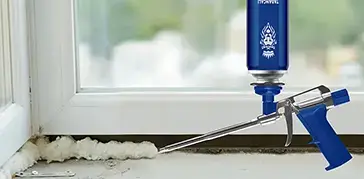
Gun-applied window foam is a single-component polyurethane sealant that expands and hardens upon contact with moisture. It is designed to fill gaps between the window frame and the wall. Application with a gun allows for precise adjustment of the amount of sealant, reducing unnecessary swelling and overflow.
One of the most critical aspects of window installation is ensuring that the gaps around the frame are filled in a way that is both secure and insulating. Window sealant gun-applied foam is ideally suited to this need, thanks to its robust construction and the precise application method of the gun.
Areas of Application
Although it's called "window foam," this product can be used in many different areas. However, its most basic use is window installation. It is a suitable material for the following applications:
- Frame fixing in window installation
- Filling the gaps around the window.
- Supports heat and sound insulation.
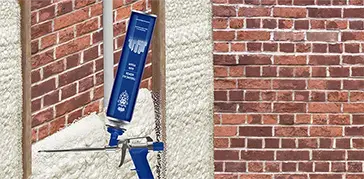
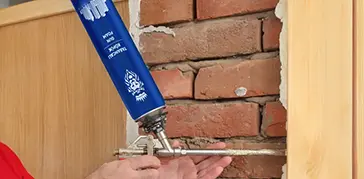
- Filling application in wood, concrete, brick and metal frames.
- Balancing the differences in expansion between the window and the wall.
- Closing small gaps and openings
Why is gun-applied foam used in window installation?
Properly securing the frame during window installation is crucial. If the frame is not securely fitted, openings, leaks, heat loss, and wind noise can occur over time. Gun-applied window sealant foam has been developed to prevent these problems.
The advantage of gun-applied foam is that the user can precisely determine the amount to be applied. Thanks to the trigger sensitivity, it can be easily applied even to narrow areas. This control mechanism ensures a smooth filling, especially around window edges.
Pre-Application Preparation
Surface preparation is crucial for a proper window foam application. The following steps should be observed:
- The surfaces to be coated must be clean, dust-free, and dry.
- If necessary, the surface should be slightly moistened. Moisture ensures ideal expansion of the polyurethane foam.
- The window frame must be securely level. It should be supported with wedges to prevent it from shifting due to the pressure of the foam.
- Ensure the gun mechanism is functioning correctly.
How to Apply Window Foam with a Spray Gun?
Gun-applied window foam application yields highly efficient results when the correct techniques are used. The following application steps are important for achieving professional installation quality:
- Shake the foam canister well and attach it vertically to the gun.
- Adjust the pistol's adjustment screw to your liking.
- Instead of filling the gaps completely, fill them about halfway. The foam will expand and completely fill the gap.
- Make sure the wedges are secure to prevent the window frame from moving.
- Do not open or close the window after applying the foam; leave it stationary until it has fully hardened.
The Process of Drying, Expansion and Hardening
After application, the foam begins to expand depending on the ambient humidity. Initial expansion is usually seen within a few minutes. Full hardening, however, may take several hours. Once hardened, the foam can be easily cut and shaped with a knife.
Maintaining the correct position of the window frame is crucial during this process. Otherwise, the expanding foam may cause the frame to slip.
Contribution to Heat and Sound Insulation
Gaps around windows are one of the most sensitive areas for heat loss in a building. If these gaps are not properly insulated, both energy costs increase and living comfort decreases. Gun-applied window foam completely fills these gaps, improving both heat and sound insulation.
Its rigid structure reduces wind noise and helps maintain a constant indoor temperature.
Advantages
Gun-applied window foam offers numerous advantages. The main ones are as follows:
- It allows for controlled application.
- It increases durability by securing the window frame.
- It makes a significant contribution to heat and sound insulation.
- It dries quickly and can be easily cut after application.
- It provides professional and clean installation.
- It creates a seamless filler even on large surfaces.
Important Considerations During Use
Some mistakes made during the application of window foam can lead to serious problems later on. Therefore, particular attention should be paid to the following points:
- Foam should not be overused. Excessive expansion can cause the case to bend or jam.
- The window should not be checked after application; it should be allowed to harden.
- If dry surfaces are not slightly moistened, the foam may not expand ideally.
- Foam left exposed to UV light can deteriorate over time, so it must be covered.
Durability and Long-Lasting Use
Gun-applied window foam forms a highly durable structure after hardening. It exhibits strong resistance to external factors such as humidity, temperature changes, vibration, and mechanical stress. It maintains its form and strength for many years during window installation. Only in areas exposed to sunlight should the foam be protected.
Tips for Professional Installation
To achieve a cleaner, more durable, and professional result, experienced installers employ certain methods:
- Applying the product by calculating the expansion allowance.
- Ensuring the wedges are in the correct positions when securing the chassis.
- Do not open the window while the foam is hardening.
- Correct adjustment of surface moisture before application.
- Checking the pistol settings frequently.
Conclusion
Gun-applied window foam is an ideal solution for filling gaps and providing strong fastening during window installation. When applied correctly, it improves insulation performance, contributes to the longevity of the frame, and ensures a robust installation. Its high level of control and durability makes it a preferred choice for both professional users and individual installers.
The information in this text may vary from time to time depending on the manufacturer. Always check the product label.