Volume Calculation of Foam with Spray Gun
Calculating the volume of foam used in a spray gun is crucial for efficient and economical application. Using the correct amount of foam during application prevents overflow and increases the foam's durability. This article will examine in detail the methods for measuring the volume of voids and determining the required amount of foam.
How is the volume of a void calculated?
To calculate the volume of a void, its shape and dimensions must first be determined. For rectangular or square voids, the formula length x width x depth is used. For circular or complex-shaped voids, the volume can be calculated by taking the diameter and height measurements. If the measurements are not taken correctly, the foam will either be insufficient or will overflow.
Determining the Amount of Foam
Once the volume is determined, the amount of foam to be used is calculated. Polyurethane foam generally expands by 20-30% in volume, so an expansion allowance must be added to the calculation. For example, approximately 0.7 liters of foam may be sufficient for 1 liter of space. Taking volume and expansion rates into account saves money and ensures a smooth application.
Application Tips
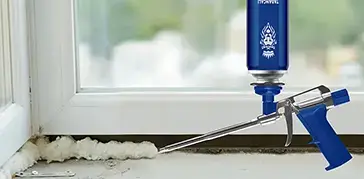
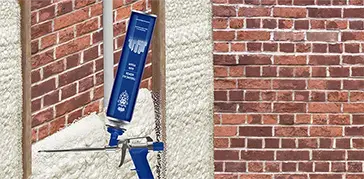
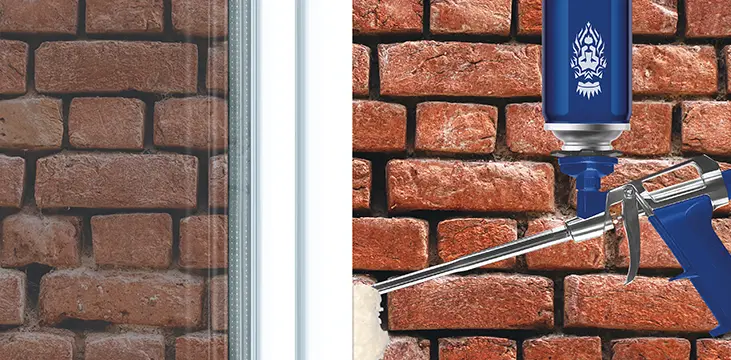
- Apply the foam in small sections, filling the gaps at once; avoid filling them all at once.
- Applying the foam in layers prevents overflow and ensures an even fill.
- Check the foam's contact with the surface before it expands and shape it with a spatula if necessary.
- Use a meter or ruler for calibration during measurement; avoid relying on guesswork.
- Since expansion and hardening times may vary in cold or humid environments, adjust the volume calculation accordingly.
Example Calculation
Let's consider a rectangular window opening as an example: length 100 cm, width 5 cm, depth 5 cm. Volume = 100 x 5 x 5 = 2500 cm³. If the expansion ratio is 30%, the required amount of foam will be approximately 1920 cm³. In this way, the foam can be applied sufficiently and without overflowing.
Extra Tips
- Rounding and allowing for tolerances when calculating volume prevents overflow.
- In layered applications, measuring and applying each layer prevents the use of excessive foam.
- Do not forget to use safety equipment during calculations and application.
- For large spaces, it's healthier to apply the foam several hours apart.
The information in this text may vary from time to time depending on the manufacturer. Always check the product label.