Gun-applied filling foam
Gun-applied filler foam is one of the most practical products used in the construction industry for gap filling, assembly, insulation applications, and sealing. Thanks to its polyurethane-based structure, it adheres strongly to surfaces and quickly gains volume, creating a durable filler. Preferred by both professional craftsmen and individual users, this product stands out especially for its controlled application using a gun.
This article explains what gun-applied foam sealant is, where it is used, its technical specifications, application methods, and all the important details to consider.
What is a sealant gun?
Gun-applied filler foam is a single-component, polyurethane-based filling and mounting material. It is applied to the surface via an application gun and expands upon contact with air, filling voids. It hardens quickly and forms a durable structure. Thanks to its high adhesive strength, it can be safely used in many construction materials.
The biggest advantage of gun-type foam systems over standard box-shaped foam systems is that the flow and quantity of foam can be controlled much more precisely. This both improves the quality of workmanship and reduces product waste.
Areas of Application
Gun-applied filler foam offers a wide range of applications. It is found in almost every area of the construction industry.
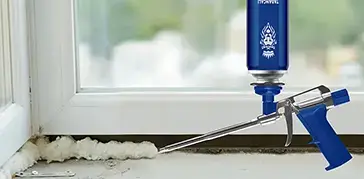
- Window and door installations
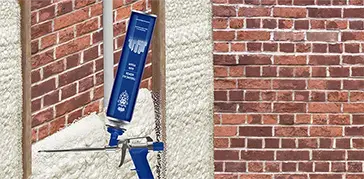
- Filling wall and floor cavities
- Roof and terrace insulation
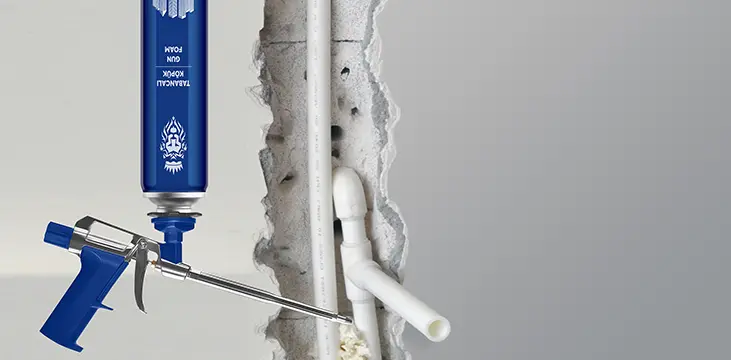
- Pipe, cable and installation penetrations
- When heat and sound insulation is required
- Securing the panels
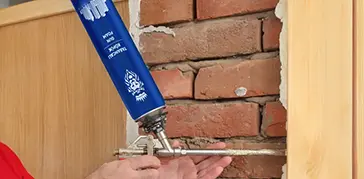
- Filling operations on concrete, metal, wood, and brick surfaces.
Thanks to its polyurethane structure, the filling foam adheres firmly to surfaces. It can also withstand minor vibrations and void changes caused by structural movements.
Technical Specifications
Most gun-applied foam fillers have certain standard technical specifications. While these may vary depending on the product content, the generally accepted characteristics are as follows:
- High expansion capacity
- Strong adhesive strength
- Heat and sound insulation support
- The structure can be cut and painted after curing.
- Creating a durable and lightweight filling.
- Possibility of controlled implementation.
Once dry, the product can be easily shaped as desired. Therefore, it is a very practical solution, especially in decorative or delicate areas.
Surface Preparation Before Application
The first step to a successful application is proper preparation. It is crucial that the surface is clean before applying the gun-applied sealant foam.
- Dust, oil, and loose particles must be removed from the surface.
- A damp surface helps the foam expand better.
- Light water spraying may be recommended in dry areas.
If surface cleaning is not done properly, the foam can settle or separate from the surface over time. Therefore, the preparation phase is as important as the application.
How to Apply Filler Foam with a Gun?
Before starting the application, the can should be shaken well and securely attached to the foam gun.
- Shake the can for about 20 seconds.
- Adjust the gun setting according to the precision of the job.
- Apply the foam starting from the bottom of the gap and working upwards.
- Be sure to account for expansion and contraction.
- Moisten the area if necessary.
A crust will form on the surface in approximately 20-25 minutes after the foam is applied. Full curing takes several hours on average. After that, cutting, sanding, and painting can be done.
Most Common Mistakes
Some mistakes users make when applying sealant with a gun can both reduce the quality of workmanship and lead to long-term problems.
- Applying excessive foam : Expansion allowance must be taken into account.
- Apply to a dry surface : Moisture strengthens the foam's structure.
- Applying to unclean surfaces : Reduces adhesion.
- Intervening before the curing time is complete : It will spoil the form of the foam.
Advantages
The biggest advantage of gun-applied foam sealant is the possibility of controlled application. This provides great convenience for both professionals and new users.
- Fine adjustment is possible.
- The failure rate is low.
- It penetrates deeply into the voids.
- Provides rapid curing.
- It offers high filling capacity.
Post-Curing Procedures
Once the foam is completely dry, any excess can be trimmed with a utility knife. The surface can then be sanded and painted. This provides both a decorative and waterproof finish.
Durability and Lifespan
Gun-applied foam sealants create a structural sealant that can last for many years. They are highly resistant to moisture, heat, and minor surface movements. However, application quality directly affects product lifespan. Foam applied to the correct surface, in the correct amount, and under appropriate conditions will last longer.
Conclusion
Gun-applied filler foam is one of the fastest and most effective solutions for filling, assembly, and insulation processes in the construction industry. Its controllable structure, strong adhesion, and high expansion capacity make it suitable for use in many areas. When applied with the correct techniques, it provides a long-lasting, durable, and professional result.
The information in this text may vary from time to time depending on the manufacturer. Always check the product label.